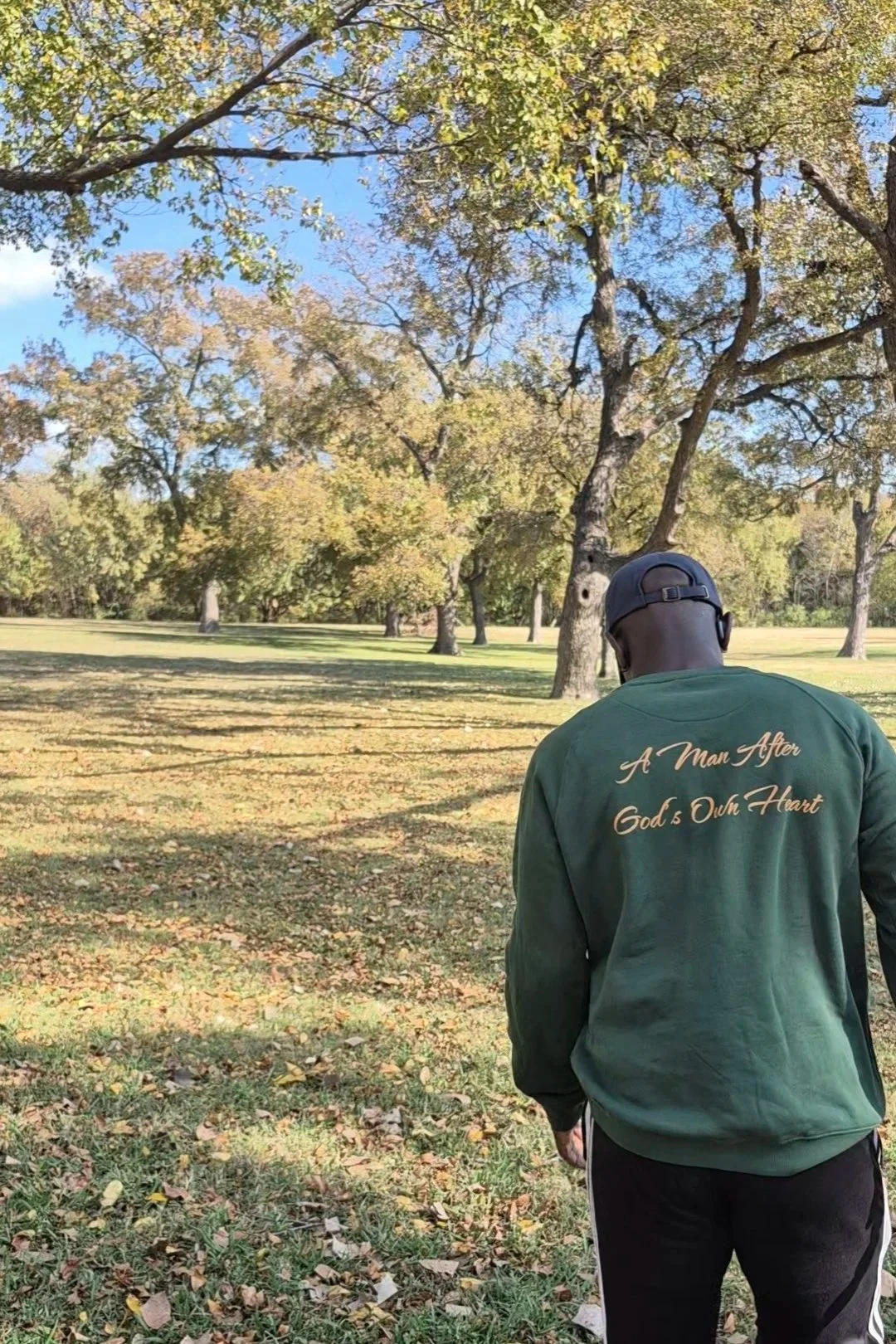
A Man After God’s Own Heart
The fascinating thing about rereading great literature at a different phase of life is that you bring with you new experiences and new understanding into the reading that help you gain deeper insight into the narrative and better understand the characters. Each time I read a biblical story with new life experience and knowledge behind me, God uncovers new lessons and unearths wisdom that was not revealed to me prior. The books that have caught my attention this time around are 1 & 2 Samuel. In 1 & 2 Samuel we are presented with the story arc of King David—the man God calls “A Man After God’s Own Heart.” Many may covet David for being seen by God so highly, and as I meditate on that title as a father, I am inspired, terrified, but ultimately hopeful about what that means for a mere man like myself.
You didn't have to grow up in church to be familiar with the story of David and Goliath. This is the ultimate underdog story. It is inspiring despite your faith background and, in its simplest form, an inspiring story about overcoming adversity and defying the odds. David is also regarded as a great man of faith, a man who contained a full range of emotions and skills. A man soft enough to cry but hard enough to kill. A man both skillful with the harp and the sword. The archetype of leadership. He is the author of the majority of Psalms. He is a complex man, to say the least. When I think about David in this light, the title “A Man After God’s Own Heart” makes sense, but there is another side to David. How am I supposed to think about David as a husband, an adulterer, a murderer, and a poor father? For most of my adult life I hyper-focused on these characteristics of David and couldn’t understand why God would see David the way He does.
For those reasons, I had a problem with King David. David’s role as a husband and father was enough for me to disqualify him as the righteous man we claim he was. And to be honest, I feel like too many sermons I heard about David tried too hard to paint David in a positive light rather than an honest light. However, today, as both a husband and a father, I enter the story with more grace and understanding. I come to the realization that the biblical depiction of David and all his flaws is actually necessary, and his qualification as “A Man After God’s Own Heart” is actually fitting.
To understand the story of David, you have to look back to the major characters in 1 Samuel who preceded him: Eli, Samuel, and Saul. It is my belief that the Bible’s introduction of each major character foreshadows their legacy and symbolic representations of warnings and assurances in David’s life. Eli was introduced as the father of wicked sons. Eli’s passive approach to discipline led to the violation of community members, and ultimately the end of the lives of him and his sons as well as their priesthood. Samuel was introduced to us by way of his mother’s heartfelt prayers and her immediate dedication of his life to the Lord right after birth. He was a prophet and was trusted to speak on behalf of God and lead the people. Saul was Israel's first king. He was described as more handsome than anyone in Israel, and a head taller than anyone else. Therefore, his looks checked the box of what a king worthy enough to represent Israel would look like—not his character—and ultimately the sinful pride that was deeply seeded in him took root and led to poor leadership, murderous intentions, and a fall from grace. Lastly, David, upon introduction, was referred to as “A Man After God’s Own Heart” and regarded as the benchmark for how a king should lead the Nation of Israel. In summary: Eli represents the implications of lack of discipline and correction within your family. Samuel represents steadfast dedication to God’s calling on our lives and God’s idea of a faithful leader. Saul represents the fate of a leader who allows pride to precede God’s purpose.
King David lived an extraordinary life. We know God’s hand was on David in battle and leadership through the victories recorded. However, to the degree we see God’s hand on David in regard to battle and leadership, we do not see the presence of God manifest in the same way in his role as a husband and a father—two roles that God, from the beginning of time, prioritizes. Where was God in David’s family? There was rape, murder, and attempts to overthrow the kingdom! Oddly enough, it doesn't seem like David sought God’s intervention in his family life until he experienced a tragedy outside of his control. David’s infamous act of adultery with Bathsheba and the murder plot to follow leads his prophet, Nathan, to confront David about his sin. At that point we witness something unique about David. We see David lament and beg God for forgiveness for his wrongdoing. This is the first time we see David invite God into the affairs of his relationships. We learn that his sin does not go unpunished, and the child from the affair dies despite the display of desperation through fasting and praying. This act of fasting and praying was the first time David invited God into the affairs of being a husband and a father. What we notice is that once David became aware of his sin, the absence of God in his decision-making, and the harm he was causing, he repented, fell to his knees, and asked God to fully intervene in the life of his family. This is the posture that qualifies him as “A Man After God’s Own Heart.” Instant repentance after the realization of sin.
Soon after this incident, Bathsheba became pregnant again and gave birth to Solomon. Things did not get better in his family overnight. Although there were still great tragedies that happened in his immediate family, I speculate that losing a child was a paradigm shift in how David approached being a husband and a father. The biggest evidence for this is how Solomon turned out in comparison to his older siblings. I believe Solomon got a different version of David—a more present, attentive, and intentional father than the others experienced. This version of David played a necessary role in who Solomon became. Solomon wrote most of Proverbs, but if you read Proverbs, you may note that much of it comes off as advice that a father would give to his child. Many credit Solomon and his great wisdom for writing these proverbs, but I have another theory. I speculate that much of what Solomon wrote came from conversations he had with a more present, more aware, and more attentive father who pleaded with God to intervene in his family affairs. The conversations that David and Solomon may have had were, unfortunately, conversations likely not had with his other children at the time they were most impressionable. This resulted in drastically different outcomes and allowed David to nurture Solomon to continue his God-given legacy and be fit to be the next king of Israel.
After studying David, I know four things to be true about sin:
Sin, by nature, will destroy what God has intended for us if we leave God out of the picture.
We must remain prayerful and surround ourselves with strong counsel to be held accountable. On the occasion David committed his most notable sin with Bathsheba and the murder to follow, he had Nathan, his trusted counsel, tell him a story which ultimately exposed to himself the sins he committed and convicted him.
Give God access and dominion to every area of our lives. It is very binary. Either God leads your life or sin does.
All of us will unconsciously (and sometimes consciously) sin to the level that our power and privilege allow us to get away with, forgetting that God is watching. At the time David pursued Bathsheba and organized the murder of her husband, he knew, as king, there would be no consequences for the decisions he made. He abused his power and knew Bathsheba would likely not disobey the king’s request. We have to honestly ask ourselves: What heinous acts would we do if we knew we could get away with them? And how would our current proclivities to sin magnify if our power and influence increased? The honest truth is that for most of us, our capacity to sin is limited by our current status, power, and privilege—otherwise, who knows what we would do?
In addition, after studying David, I know three things about repentance:
Repentance is a process. It involves turning away from sin and then inviting God into the void where sin previously resided for redemption to take place.
When we don't repent and leave God out of an area of our life, we allow the sin to take root, grow, choke out the blessings, and block the legacy God may have for us.
God sees your heart over your sin. There is no sin too grand that God cannot forgive. There is no course that God cannot correct.
So is the title “A Man After God’s Own Heart” unique to David? I don't think so. God fully knew David—the good, the bad, and the ugly—but David exemplified time and time again that when he became aware of his sin, he was heartbroken, prayed, and repented. We learn from Eli and Saul that legacy is an opportunity from God, not an obligation. Therefore, because David, when his sins were exposed, repented, he avoided the fate of Eli and Saul. David repented, and like Saul, remained in good standing with God, therefore securing his legacy.
Being “A Man After God’s Own Heart” is not about being a perfect, sinless man, but instead a man who has a steady posture of repentance demonstrated both in heart and action. Therefore, in God’s eyes, David’s sins with Bathsheba, the murder, and his shortcomings as a father did not disqualify him; his posture toward repentance qualified him.
As I mentioned at the beginning, as a father I am inspired, terrified, but ultimately hopeful about what that means for a mere man like myself.
I’m inspired because God calls David “a man” after God’s own heart—not a king, not a prophet, not an angel—a man. This humanizes David and allows me to believe that title is available for all of us to grasp. So a mere man, just like me, who has sinful proclivities just like me, can be considered so highly by God by having a posture of repentance.
I’m terrified because even someone considered “A Man After God’s Own Heart,” by being blind to his own sin and not inviting God into certain areas of his life, could result in such a toxic family dynamic.
I am hopeful because I know that no matter what trials or tribulations come my way, a redemptive path will be provided through repentance, and what may appear to be a broken legacy can still be redeemed.
My prayer:
God, open my eyes to the areas of my life where I am blind to my own sin. Please show me the areas of my life where I have not invited You to take full control. Please, like David, allow me to be “A Man After God’s Own Heart” so that I maintain a posture of repentance. Please expose my sin early so that it does not take root and bear fruit at a time when increased power and privilege would cause the most damage. Thank you, God, for providing the ultimate pathway to redemption through Your Son Jesus.
Amen.